The Three R's of Labor and the Law of the Sphincter
Trusting the Way Your Body Was Designed.
One of the greatest gifts you can give yourself during pregnancy is understanding how your body was designed to give birth. While it's natural to spend time preparing a nursery, packing a birth bag, or learning the stages of labor, one of the most important things you can prepare is your mindset.
As labor becomes more intense, the mind naturally looks for something to hold onto. Fear and tension can easily take over if we don't have tools that help us remain grounded. I often teach what I call the Three R's of labor: Relaxation, Rhythm, and Ritual. Together, they provide a simple roadmap for navigating labor while sending a powerful message to your nervous system: I am safe. Birth is not simply a physical event. It is emotional, mental, and spiritual. When we understand how our bodies respond to safety and stress, we can begin working with our bodies instead of against them.
Relaxation
One of the biggest misconceptions about labor is that every muscle in the body should be working hard. In reality, your uterus is doing the work of labor. The rest of your body is most helpful when it can soften and release unnecessary tension. As contractions become stronger, many women instinctively tighten their jaw, clench their fists, lift their shoulders, or furrow their brow. It's a normal response, but tension in one part of the body often creates tension elsewhere, especially in the pelvic floor.
One of the simplest reminders I share with mothers is, "Soft jaw, soft bottom." Our bodies are remarkably connected. A relaxed jaw often encourages a relaxed pelvis, allowing the muscles surrounding the birth canal to soften rather than resist. During each surge, gently check in with yourself. Are your shoulders tight? Is your jaw clenched? Are your hands gripping the bed or your partner? As you notice those places, take a slow breath and consciously let them relax.
Rhythm
Labor has a rhythm all its own. Surges build, peak, and fade, and when we begin to trust that pattern instead of resisting it, labor often becomes less overwhelming. Rhythm helps quiet the thinking part of the brain and allows the more instinctive part of us to take over. Instead of analyzing every contraction, we learn to experience one wave at a time. For some women, rhythm looks like swaying with their partner. Others find comfort rocking on a birth ball, walking through the room, or gently moving their hips. Even breathing can become a rhythm. Slowly breathing in for four counts and exhaling for eight encourages the body to relax and reminds the nervous system that it is safe.
Vocalization is another beautiful form of rhythm. Low, deep moans or humming create vibration throughout the body and often help women move through contractions rather than brace against them. There is no perfect sound or movement. The goal is simply to find a rhythm that allows your body to stay open to the work of labor.
Ritual
Birth is one of life's most sacred moments, and I believe the environment should reflect that. Simple rituals can bring familiarity and comfort during labor. They create gentle pauses between contractions and remind the mind and body that everything is okay. For one family, that ritual may be a husband quietly offering a sip of water and placing a cool cloth on his wife's forehead after every surge. For another, it may be worship music playing softly in the background, a favorite Scripture displayed nearby, or the familiar scent of lavender filling the room.
These rituals don't make labor easier because they are magical. They help because they create consistency. They provide a sense of peace and become small reminders that birth is unfolding just as it should.
When a woman feels cared for, supported, and surrounded by calm, she is often better able to surrender to the work her body is doing.
The Law of the Sphincter
One of the most fascinating principles of birth comes from midwife Ina May Gaskin's teaching known as the Law of the Sphincter.
The cervix, vagina, and anus are all sphincter muscles. Unlike muscles we consciously control, sphincters don't respond well to force or command. They open when the conditions are right. Think about trying to fall asleep. The harder you try, the more awake you become. Or think about trying to use a public restroom when you know someone is standing outside the door. Even though your body is capable, privacy matters. Birth works in much the same way.
Sphincters function best when a woman feels safe, warm, private, and undisturbed. Bright lights, frequent interruptions, fear, being watched, or feeling startled can all cause the body to tighten. On the other hand, love, reassurance, laughter, privacy, and feeling deeply cared for encourage the release of oxytocin, the hormone that helps labor progress.
This is one of the reasons I believe so strongly that the atmosphere surrounding birth matters. The room matters. The people matter. The words spoken matter. Everything about the environment should communicate one simple message: You are safe here.
Trust the Design
Every labor unfolds differently, and there is no formula that guarantees a particular birth experience. But there are ways we can cooperate with the incredible design of the body instead of unknowingly working against it. Relaxation helps release unnecessary tension. Rhythm gives the mind something steady to follow. Ritual creates familiarity and peace during moments of intensity. Together, these practices support the body's natural processes and create the kind of environment where birth can unfold more freely.
Birth asks us to surrender more than it asks us to perform. It invites us to trust, to soften, and to let go of the need to control every moment.
As a midwife, one of my greatest privileges is protecting that space. I cannot birth your baby for you, but I can help create an atmosphere where you feel safe, seen, and supported. When women feel deeply cared for, something remarkable often happens. Their bodies remember what they were beautifully designed to do.

Birth preparation is about more than knowing what to expect, it's about learning to trust your body, quiet fear, and create an environment where labor can unfold naturally. The Sacred Anchor shares the tools, mindset, and education I teach my own clients as they prepare to welcome their babies.
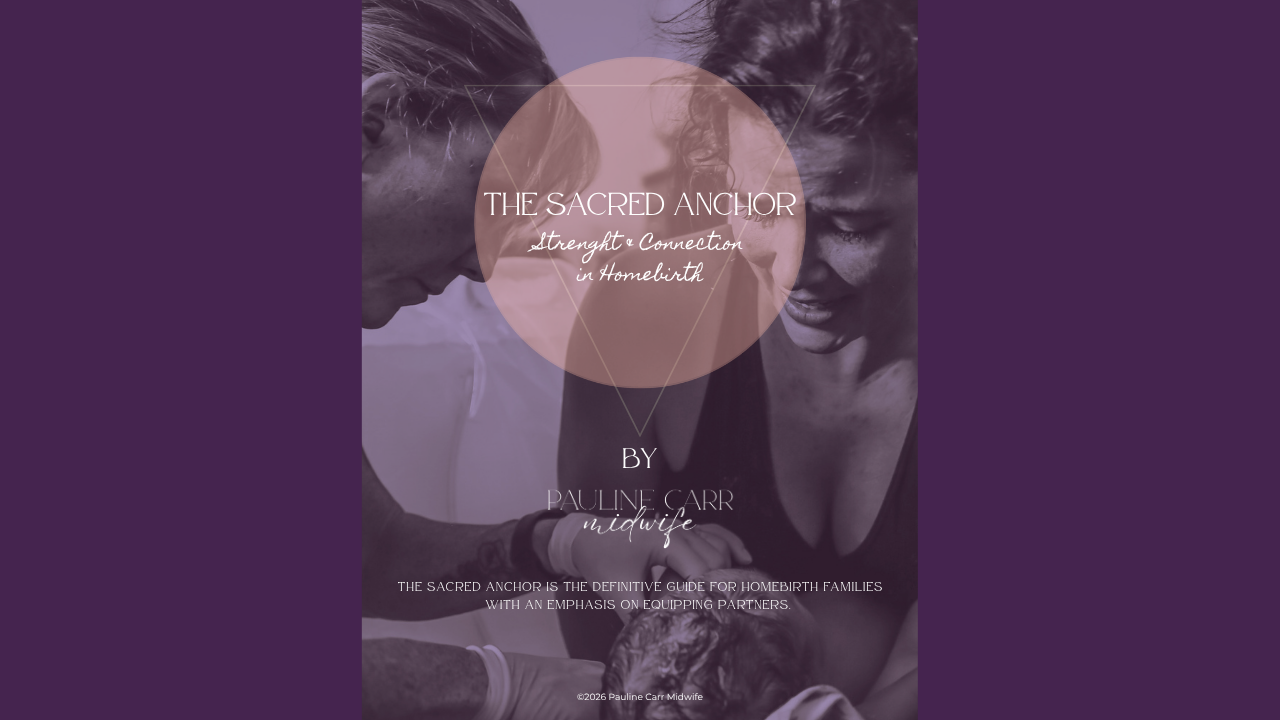
The Sacred Anchor is the definitive guide for homebirth families with an emphasis on equipping partners.