Common Prenatal Tests Midwives Use to Check On You and Baby
One of the things I love about prenatal care is that it gives us time to truly get to know you, your baby, and the way your pregnancy is unfolding.
Homebirth care may feel different from a traditional medical setting, but that doesn't mean we aren't carefully monitoring the health and well-being of both you and your baby. Throughout pregnancy, there are different measurements, screenings, blood tests, and other tools we may recommend based on where you are in your pregnancy, your health history, and what we are seeing along the way.
I also believe education is an important part of this process. I don't want you to simply hear, "It's time for this test," without understanding what we're looking for or why it might be helpful. My role is to give you information, answer your questions, make recommendations based on your individual pregnancy, and help you make informed decisions about your care.
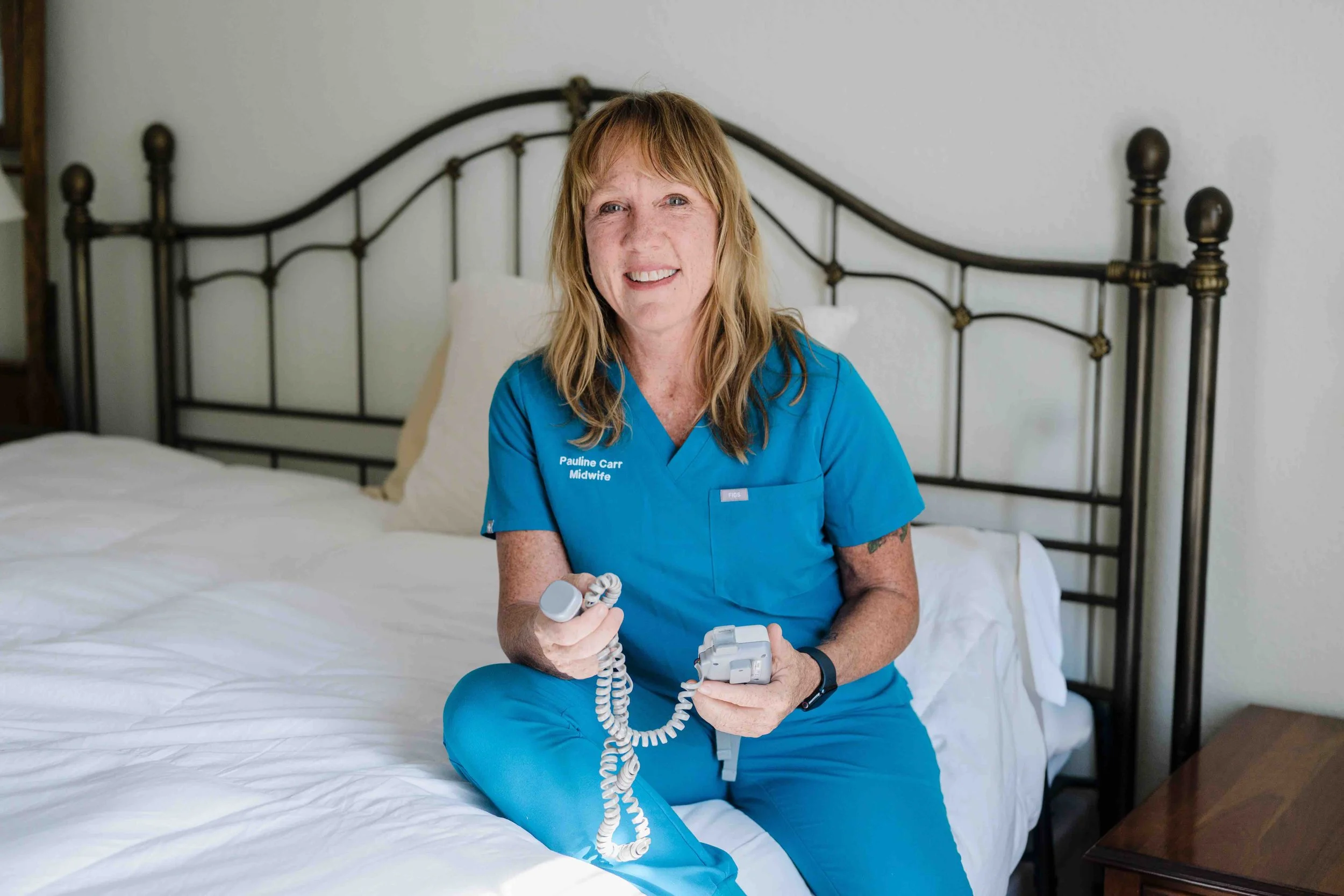
Here are a few of the common ways we check on you and your baby throughout pregnancy.
Fundal Height
Fundal height is one of the simplest tools we use during routine prenatal visits. As your uterus grows, we measure from the top of the pubic bone to the top of the uterus, called the fundus. Beginning around the middle of pregnancy, this measurement in centimeters often roughly corresponds with the number of weeks pregnant you are. Fundal height gives us a simple way to follow your baby's growth over time. One measurement outside the expected range doesn't automatically mean something is wrong. Things like baby's position, your body, and even who is doing the measuring can make a difference.
If there is a pattern that makes us curious about baby's growth, we may recommend additional evaluation, such as an ultrasound.
Routine Bloodwork
Bloodwork gives us helpful information about your health and can identify things we may want to monitor or address during pregnancy. Depending on the stage of pregnancy, we may look at things such as your blood type and Rh factor, hemoglobin and iron status, immunity to certain infections, and screening for infections that could affect pregnancy or baby.
Additional bloodwork may be recommended later in pregnancy depending on your individual needs. The purpose isn't simply to collect numbers. It's to give us another piece of information about how your body is handling pregnancy and whether there is anything we can support before birth.
Ultrasound
Ultrasound can be a helpful tool at different points in pregnancy. Some families choose an early ultrasound to help confirm dating or viability. A detailed anatomy ultrasound is commonly offered around the middle of pregnancy to look at baby's growth and development, the placenta, amniotic fluid, and other structures. Later ultrasounds aren't automatically necessary for every pregnancy, but there are times when I may recommend one because we want more information. For example, if fundal height is measuring differently than expected, we have questions about baby's position or growth, or another concern comes up, ultrasound can help us get a clearer picture.
Genetic Screening
Genetic screening is another option families may encounter early in pregnancy. Different types of screening can estimate the chance that a baby has certain chromosomal or genetic conditions. Some screening may also provide information about baby's sex. This is an area where I especially encourage families to think about what information they want and what they would do with it. Screening is not the same thing as diagnosis, and sometimes an abnormal screening result leads to additional testing or conversations with specialists. Understanding what a test can and cannot tell you is an important part of deciding whether you want it.
Group B Strep (GBS) Screening
Later in pregnancy, usually around 36 to 37 weeks, families are commonly offered testing for Group B Streptococcus, or GBS. GBS is a common bacterium that can naturally live in the digestive or genital tract without making the mother sick. The reason we care about it during pregnancy is that, in some cases, GBS can be passed to a baby around the time of birth and cause serious infection. Knowing your GBS status before labor allows us to have an informed conversation about recommendations, options, and what that may mean for your birth and newborn.
Gestational Diabetes Screening
Gestational diabetes screening is typically offered between 24 and 28 weeks of pregnancy. This helps us understand how your body is processing glucose during pregnancy and whether your blood sugar levels are higher than expected. Gestational diabetes doesn't always cause noticeable symptoms, which is why screening can be helpful even when you feel wonderful and your pregnancy seems to be progressing normally. If results show that your blood sugar is elevated, we can talk through what that means, whether additional testing is needed, and ways to support both you and baby throughout the remainder of your pregnancy.
As with other prenatal testing, I want you to understand why it's being offered, what the results can tell us, and what your options are so you can make an informed decision about your care.
Sometimes We Recommend More Information
Every pregnancy is different, which means prenatal care should never feel like a one-size-fits-all checklist. There may be times when something in your health history, blood pressure, symptoms, baby's growth, or another finding causes me to recommend additional testing or consultation.
That recommendation isn't meant to create fear. It simply means we have an opportunity to gather more information.
You Have a Voice in Your Prenatal Care
This may be the most important part of this entire conversation: you are an active participant in your care.
A test being routinely offered does not mean you should automatically say yes without understanding it. You have the right to ask what the test is looking for, why I am recommending it, what the potential benefits and limitations are, what happens if you choose not to do it, and whether there are alternatives. Families may choose to accept some prenatal screenings and decline others. My job as your midwife is not to make those decisions for you. My job is to make sure you have accurate information and understand the potential implications of your choices so you can give truly informed consent or informed refusal.
There may also be situations where declining a particular test changes what I can safely offer or whether homebirth remains an appropriate option. If that happens, we talk about it openly. Autonomy doesn't mean pretending that every decision carries the same risks. It means having honest conversations about those risks and making decisions with good information. This is your pregnancy. This is your baby. And ultimately, these are your decisions.
I believe you should leave your prenatal visits knowing more about your body and baby than when you walked in. You should feel comfortable asking questions, taking time to think, and understanding why something is being recommended rather than feeling like pregnancy is simply a series of boxes someone else gets to check.
That relationship is one of the things I treasure most about midwifery care. We have time to talk. We have time to learn. And we have time to make thoughtful decisions together while keeping the health and well-being of you and your baby at the heart of everything we do.